Electrified NY Blogs
How Regular Electrical Inspections Protect Brooklyn Homes from Fire Hazards
Summary:
Why Electrical Fires Happen in Brooklyn Homes
Electrical fires don’t just happen in neglected properties or obvious disaster zones. They start in homes that look perfectly normal from the outside—homes where the wiring is decades old, where circuits are quietly overloaded, and where small problems have been ignored long enough to become dangerous.
The statistics tell a clear story. Over 51,000 electrical fires occur in U.S. homes every year, causing nearly 500 deaths, more than 1,400 injuries, and $1.3 billion in property damage. Electrical distribution systems rank as the third leading cause of home structure fires. In Brooklyn, where many buildings date back to the early 1900s, the risk is even higher.
Your home’s electrical system was designed for a different era. If your building went up before 1970, there’s a good chance it’s running on wiring that was never meant to power smart TVs, air conditioners, kitchen appliances, and charging stations all at once. When you push an old system beyond its limits, something has to give—and when it does, it often gives in the form of heat, sparks, and fire. Regular electrical maintenance and inspections are how you stay ahead of these problems instead of reacting to them after damage is done.
Common Electrical Hazards Hiding in Older Brooklyn Buildings
Walk through most Brooklyn neighborhoods and you’ll see beautiful brownstones, charming pre-war apartments, and historic buildings that have stood for generations. What you won’t see is what’s behind the walls: knob-and-tube wiring from the 1930s, aluminum wiring from the 1960s, cloth-wrapped insulation that’s crumbling, and electrical panels that were never designed to handle modern loads.
Knob-and-tube wiring was standard in homes built before 1935. It worked fine for a few light bulbs and maybe a radio. It doesn’t work fine for a household running multiple devices in every room. This type of wiring lacks proper grounding, which means there’s no safety net if something goes wrong. Insurance companies know this. Many won’t even cover homes with knob-and-tube wiring still in place.
Aluminum wiring became popular in the 1960s and 70s when copper prices spiked. The problem is that aluminum oxidizes faster than copper, and oxidized connections create resistance. Resistance creates heat. Heat creates fire. If your home was wired during that period and you’ve never had it checked, you’re living with a known fire hazard.
Then there’s the issue of capacity. Older Brooklyn homes typically have 60 or 100-amp electrical panels. Modern homes need 200 amps to safely run air conditioning, electric stoves, washers, dryers, and all the other appliances we consider standard. When you overload an undersized panel, breakers trip constantly—or worse, they don’t trip when they should, and the wiring overheats instead.
Overloaded circuits are one of the most common causes of electrical fires, and they’re also one of the easiest problems to miss. You plug in a space heater, run the microwave, and suddenly the lights dim. That’s not normal. That’s your electrical system telling you it can’t keep up. If you ignore it long enough, the system will fail in a way you can’t ignore.
Faulty connections are another silent threat. Over time, wires loosen. Terminals corrode. Insulation breaks down. These aren’t problems you can spot by flipping a switch. They’re problems that show up on a thermal imaging scan or during a hands-on inspection by someone who knows what to look for. A loose connection might work fine for years—until it doesn’t, and then it arcs, sparks, and ignites whatever’s nearby.
Warning Signs Your Brooklyn Home Needs an Electrical Inspection
Your electrical system gives you clues when something’s wrong. The trick is knowing what to look for and not brushing it off as “just one of those things.” If you’re noticing any of these signs, you don’t need to wait for a scheduled inspection. You need to call an electrician now.
Flickering or dimming lights are often the first sign of trouble. If lights dim when you turn on an appliance, your circuit is overloaded. If they flicker randomly, you might have a loose connection somewhere in the system. Either way, it’s not normal, and it’s not something that fixes itself.
Breakers that trip frequently are trying to protect you. When a circuit breaker trips, it’s doing its job—cutting power before the wiring overheats. But if the same breaker keeps tripping, or if you’re constantly resetting breakers just to keep things running, the problem isn’t the breaker. The problem is that your system is being asked to do more than it was built for.
Warm or discolored outlets are a red flag. Outlets should never feel warm to the touch. If they do, it means there’s resistance in the connection, and that resistance is generating heat. Discoloration around an outlet—usually a brown or black scorch mark—means the outlet has already overheated. That’s not a cosmetic issue. That’s a fire waiting to happen.
Burning smells near outlets, switches, or your electrical panel are an emergency. If you smell something burning and you can’t identify the source, don’t wait to figure it out. Shut off power at the main panel and call an electrician immediately. Electrical fires often start with a smell before you ever see smoke or flames.
Buzzing or crackling sounds from outlets, switches, or the panel mean electricity is arcing somewhere it shouldn’t be. Electricity should flow silently through properly functioning wiring. If you hear it, something’s wrong. Arcing creates heat, and heat creates fire.
Old wiring that’s visible in your basement, attic, or behind outlet covers is worth a closer look. If you see cloth-wrapped wiring, frayed insulation, or wires that look brittle or damaged, that wiring is past its useful life. It might still work, but it’s not safe, and it won’t pass an inspection if you ever try to sell your home.
Even if you’re not seeing any of these warning signs, age alone is a reason to schedule an inspection. Experts recommend electrical inspections every three to five years for most homes, and every two to three years for homes older than 25 years. If your Brooklyn home was built before 1970 and you’ve never had the electrical system inspected, you’re overdue.
Want live answers?
Connect with a Electrified expert for fast, friendly support.
What Happens During a Professional Electrical Inspection
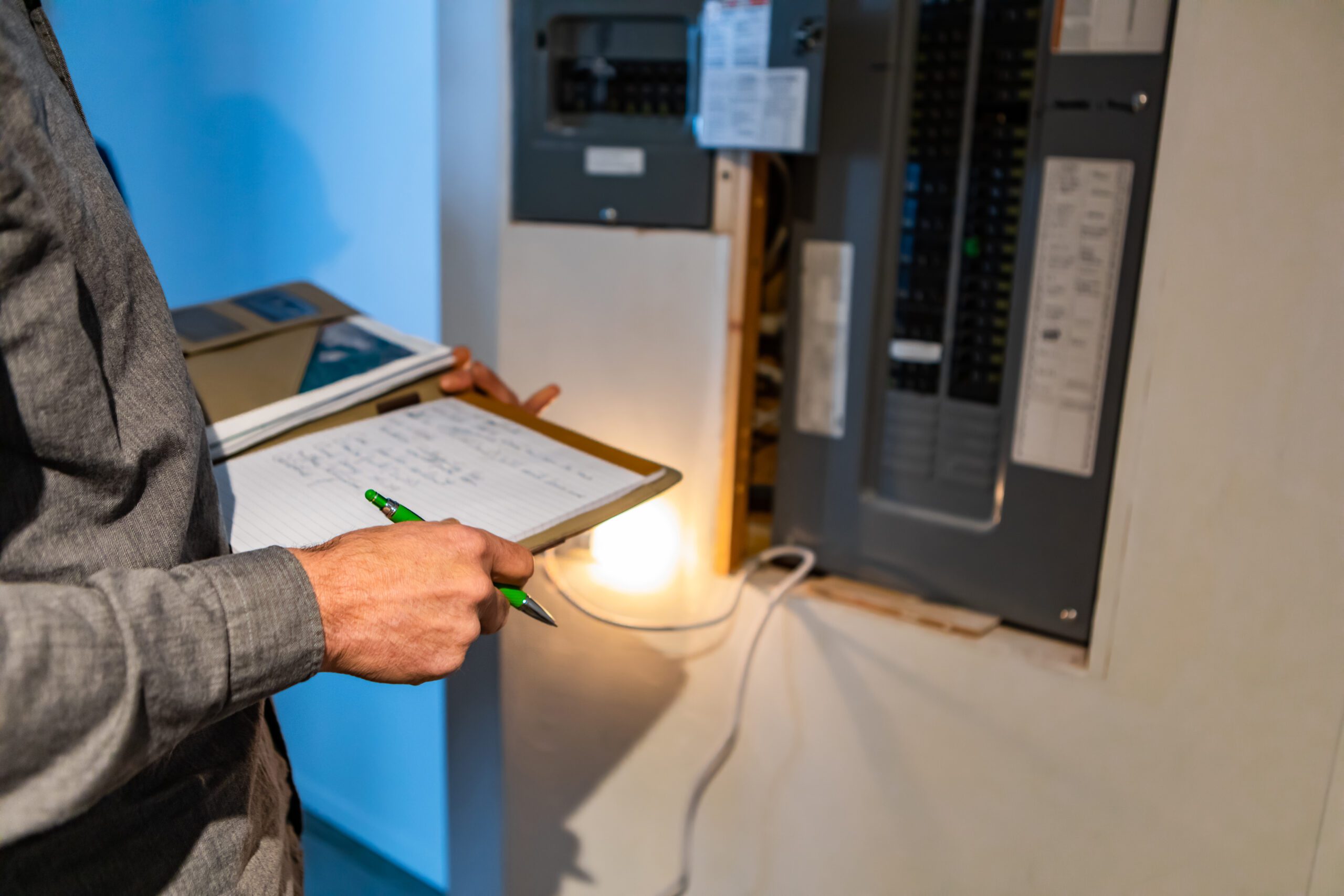
An electrical inspection isn’t someone glancing at your breaker box and calling it good. It’s a methodical evaluation of your entire electrical system, from the service entrance where power comes into your home, all the way through to the outlets in every room.
We start by reviewing your home’s history. How old is the building? When was the electrical system last updated? Have you added any major appliances or done any renovations? This context helps us know what to look for and where the likely problem areas are.
The inspection itself covers every accessible part of your electrical system. That includes the main service panel, all circuit breakers, the grounding system, outlets, switches, light fixtures, and any visible wiring. We use specialized tools to test voltage, check for proper grounding, and identify any circuits that are overloaded or improperly wired. In some cases, thermal imaging is used to detect hot spots that indicate resistance or poor connections. These residential electrical services are designed to catch problems you’d never see on your own.
How Electrical Inspections Detect Fire Hazards Before They Ignite
The whole point of an electrical inspection is to find problems before they become emergencies. Most electrical fires don’t start with a dramatic explosion. They start with a small issue that’s been slowly getting worse—a loose connection that’s been arcing for months, insulation that’s been deteriorating for years, a circuit that’s been overloaded every single day.
During an inspection, we’re looking for exactly those kinds of problems. Loose connections get tightened or replaced. Overloaded circuits get redistributed or upgraded. Outdated wiring gets flagged for replacement. Improperly grounded systems get corrected. Every one of these fixes reduces your fire risk.
One of the most valuable parts of an inspection is identifying code violations. Electrical codes exist for a reason—they’re based on decades of research into what causes fires and how to prevent them. If your home’s electrical system doesn’t meet current code, it’s not just a paperwork problem. It’s a safety problem. And if you ever try to sell your home, those code violations will come up during the buyer’s inspection, potentially killing the deal or forcing you into expensive last-minute repairs.
Inspections also catch DIY electrical work that wasn’t done correctly. Maybe a previous owner added an outlet without pulling a permit. Maybe someone ran an extension cord through the wall instead of installing proper wiring. Maybe a handyman swapped out a breaker without understanding load calculations. These shortcuts might work for a while, but they’re dangerous, and they won’t pass inspection.
For Brooklyn homeowners dealing with older buildings, inspections are especially important because they reveal problems that are specific to aging systems. Knob-and-tube wiring, aluminum wiring, undersized panels, lack of GFCI protection in kitchens and bathrooms, improper grounding—these are all issues that show up in older homes, and they’re all fire hazards that need to be addressed.
The inspection report you receive at the end will lay out everything we found, along with recommendations for repairs or upgrades. Some issues might be urgent—things that need to be fixed immediately because they pose an active fire risk. Others might be less critical but still worth addressing to bring your system up to code and improve safety.
Brooklyn Code Compliance and Why It Matters for Your Home
New York City has its own electrical code, and it’s based on the National Electrical Code with specific amendments for local conditions. If you’re living in Brooklyn, your electrical system needs to meet those standards—not just for safety, but because it’s the law.
Code compliance isn’t optional. If you’re doing any electrical work that requires a permit—and most electrical work does—the work has to meet code, and it has to be inspected by the city. If you try to sell your home and the buyer’s inspector finds code violations, you’ll either have to fix them or negotiate a lower sale price to account for the cost of repairs.
More importantly, code compliance protects you. The requirements in the electrical code are there because they prevent fires, shocks, and electrocutions. Proper grounding prevents shocks. GFCI outlets in kitchens and bathrooms prevent electrocution. AFCI breakers detect arcing and shut off power before a fire starts. Load calculations ensure circuits aren’t overloaded. All of these things are required by code, and all of them make your home safer.
When you hire a licensed electrician to inspect your home, we’re checking for code compliance as part of the process. We’ll identify any violations and explain what needs to be done to bring your system up to standard. If your home is older and has never been updated, there’s a good chance you’ll have some violations—not because you did anything wrong, but because the code has changed since your home was built.
Bringing an older Brooklyn home up to code can feel like a big project, but it’s worth it. You’ll have a safer home, lower insurance premiums, better resale value, and the peace of mind that comes from knowing your electrical system isn’t a fire hazard. And if you ever do need to sell, you won’t be scrambling to fix violations at the last minute while a buyer waits.
Insurance companies care about code compliance too. If your home has known electrical hazards—especially knob-and-tube or aluminum wiring—you might have trouble getting coverage, or you might pay higher premiums. Some insurers won’t cover homes with these issues at all until they’re fixed. A documented electrical inspection showing that your system is up to code can actually lower your insurance costs.
Protecting Your Brooklyn Home Starts with an Electrical Inspection
Electrical fires are preventable. The wiring problems that cause them don’t appear overnight—they build up slowly, giving you plenty of time to catch them if you’re paying attention. Regular electrical inspections are how you catch them. They’re how you find the loose connection before it arcs, the overloaded circuit before it overheats, the outdated wiring before it fails.
If you’re living in an older Brooklyn home, or if you’ve noticed any of the warning signs we’ve talked about, don’t wait. The cost of an inspection is a fraction of what you’d pay to repair fire damage, and it’s nothing compared to the cost of losing your home or putting your family at risk.
We provide thorough electrical inspections for Brooklyn homeowners who want to know their homes are safe. Licensed, experienced, and focused on finding real problems—not creating unnecessary work—we’ll give you a clear picture of where your electrical system stands and what, if anything, needs attention.